• When Romance and Suspense Collide

    December 7, 2025
    Blog Post

    About eight months back, I published my first novel: a romantic thriller with spy and paranormal elements.

    Lately, a lot of people have been asking me what exactly a romantic thriller is. I have done some research, and here is what I have found.

    A romantic thriller is where heart-pounding suspense meets heart-stopping emotion. It’s the kind of story that keeps readers flipping pages long after midnight, not just to find out who did it, but to see whether the two leads will survive long enough to admit their love for each other.

    At its core, a romantic thriller blends two powerful storytelling engines: danger and desire. The plot weaves high-stakes tension like mystery, espionage, crime, and psychological danger with a relationship that is just as intense. The romance doesn’t sit politely in the background; it drives the story, complicates decisions, and raises the stakes.

    Romantic thrillers are layered with shadowy threats, impossible choices, secrets that can ruin everything, and two characters who fight the world, and sometimes each other, while trying to resolve whatever troubles they are facing.

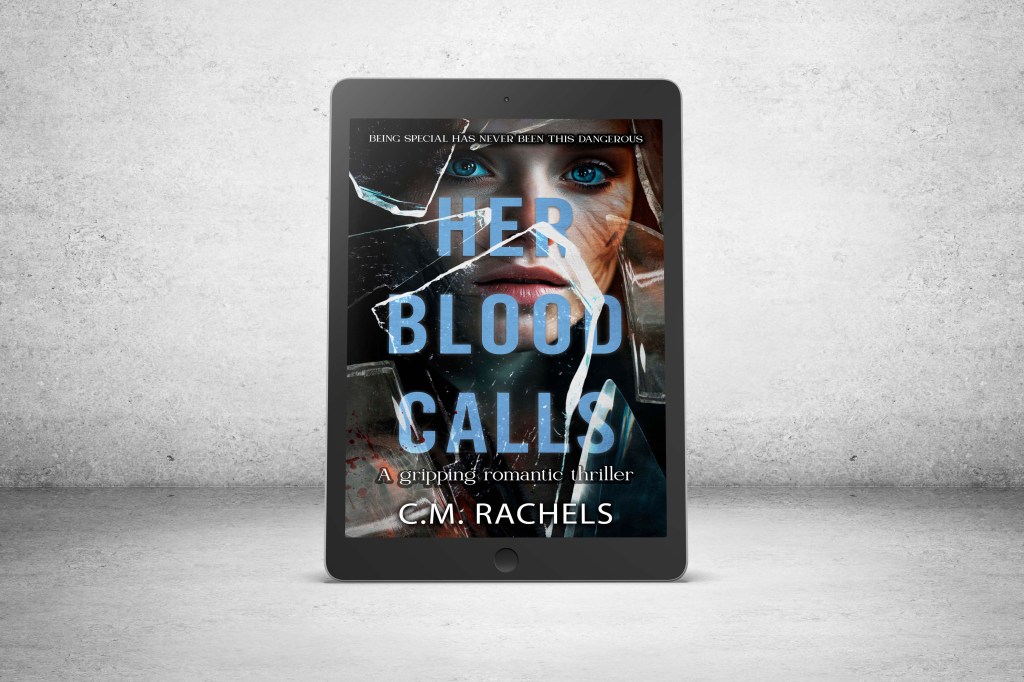
    If you crave stories that make your pulse race in more ways than one, check out my book, Her Blood Calls.

    No comments on When Romance and Suspense Collide
  • Writing Chaos

    October 28, 2025
    Blog Post

    They say writing a novel is like running a marathon. I disagree. In a marathon, no one questions whether your protagonist has “sufficient emotional depth” or tells you your pacing is off halfway through the course. Writing a novel is more like running a marathon with endless hills.

    First, you get the brilliant idea hill. This happens when inspiration strikes, usually in the early morning hours. You jolt awake in a frenzy and scribble down a few lines that totally make sense to your sleep-deprived brain at that moment. Then you wake up the next morning and discover you’ve written: “Time is soup. He was the spoon.” Okay?

    Next hill: Chapter One. You write your first thousand words, and it’s glorious. The words flow, the characters sparkle, and you briefly consider quitting your job because you’re clearly destined for bestseller lists. You reward yourself with snacks and a victory dance. Then you type “Chapter Two” and realize you have no idea what happens next.

    You take a breather (or three) and keep going. Halfway through your first draft, a friend innocently asks, “Wait, why didn’t they just call the police?” And, just like that, your entire story plot collapses in on itself like a dying star. You try to fix it, but every solution creates three new problems. Eventually, you add a mysterious storm, a case of amnesia, or spontaneous teleportation and move on.

    But the struggle is far from over, because by now your characters are revolting. They were supposed to follow your outline. Instead, they’ve developed opinions. They refuse to go where you tell them. The villain starts flirting with the protagonist. The side character you created as comic relief is now emotionally devastating. You’re not in charge anymore; you’re just the underpaid secretary taking notes.

    Finally, after countless late nights, you finish your first draft. You take a well-deserved rest, then open your draft the next day to start revising and discover it’s terrible. You edit. You rewrite. You delete. Somewhere around Draft 7, you begin to question whether words have ever made sense.

    You begin to wonder: Who am I? Why am I doing this? Maybe I should have taken up knitting. Knitting seems peaceful. Knitting needles don’t give you imposter syndrome. But then, just when you’re ready to give up, you read one of your old chapters and think, “That’s actually pretty good.” And just like that, you’re back at your desk, typing furiously, sure that this time, it’ll all come together.

    Moral of the story: Writing a novel is chaos. Beautiful, exhausting, hilarious chaos. And if you can stand in the wreckage and still laugh, you’re halfway to the finish line.

    No comments on Writing Chaos
  • It’s Okay to Take a Break

    October 13, 2025
    Blog Post

    When a writer’s muse sings, there’s no stopping the inspirational train and the mania that follows.

    Minutes turn into hours, and hours into days. Before you know it, you’ve been living off coffee and crackers, your characters are making decisions without your permission, and your plot resembles a spaghetti diagram. Nothing, though, tops this creative chaos when words flow effortlessly, and ideas connect seamlessly.

    But even the most passionate creative storms need a pause. Stepping away, if only for a moment, can help you untangle the mess, regain perspective, and maybe even remember what day it is. Taking a break doesn’t mean losing momentum; it means preserving it. Here are some ideas to avoid getting burned out:

    Take a Walk. No phone, no podcast. Just observe. Let your senses wander.

    Stretch or Meditate. Focus on breath and movement to counter the stillness of writing.

    Nap or Lie Down. A short nap can reset your brain and help with mental clarity.

    Dance Around. Blast a song and get your body moving. It will help to uplift your mood.

    Read for Pleasure. Something unrelated to your writing project, like a comic or a poem.

    Watch Something Light. It’s a great way to let go for a while and decompress.

    Go Somewhere New. Changing scenery can shift your perspective.

    Take a Bath or Shower. It will help relax stiff muscles and alleviate stress.

    Engage with Nature. Tending to plants or animals is soothing and grounding.

    It’s good to enjoy your creative surge, but sometimes a quiet pause is just as vital as the words that follow. Be kind to yourself, and take a break when necessary.

    No comments on It’s Okay to Take a Break
  • Tips for Worldbuilding

    September 10, 2025
    Blog Post

    Creating immersive story worlds without overwhelming readers is crucial to crafting a compelling story. I’m currently busy building my fictional world in my sequel, and I thought I’d share a few tips I was given that helped me sharpen my worldbuilding skills.

    Start by laying the foundation of your world: culture, history, environment, religion, and social rules. Then focus on weaving details naturally into your story. Select a few notable elements, such as unique architecture, landscapes, or local customs, that reveal your world’s personality. Show these through your characters’ interactions and experiences, rather than lengthy exposition.

    Appeal to the reader’s senses. Describe what the characters see, hear, smell, taste, and the different textures in the environment. Ground your setting in specific details, such as peeling paint on a door or the hum of distant traffic. By using all the senses, the story becomes much more vivid and immersive to the reader.

    Lastly, use your setting to reveal mood and character. For example, a stormy night might mirror inner turmoil, while a sunlit garden hints at hope. Let your locations evolve; seasons change, cities grow, landscapes transform.

    Vivid settings don’t just exist; they interact with your plot and characters, shaping the entire narrative. It’s a vital part of any story.

    No comments on Tips for Worldbuilding
  • Just Be You

    August 23, 2025
    Blog Post

    I want to give a big shout-out to all the people living their lives to the best of their abilities despite illness. I know the struggle very well, and I know it’s not always easy to keep going. It takes a lot of will and a lot of courage to rise above your circumstances and make the best with what you’ve been given.

    I have been thinking a lot about how significantly an illness can affect someone’s life these last couple of weeks. People keep asking me about my next book, and then get annoyed when I say next year. “Why can’t it be this year?” they say. “Other writers write three to four books a year.”

    Well, I’m not like other authors, and not everyone is born with the same abilities. We were given different strengths, weaknesses, and resources.

    I was diagnosed with systemic lupus erythematosus (SLE) in 2012. I can’t stay all day in the sun, hike or work for hours on end without getting tired, or be around sick people without catching what they have. (I guess that’s why I wrote a book about a girl who can’t get sick, because I know how it feels to constantly be tired and sick.) That is my reality, and I have accepted it. I make it work. I do me.

    Life gives us hiccups, but we endure, and we survive. No matter what people say (and I know how cruel and insensitive some can be), just be you. Uniquely you. And be kind. You don’t know the battles people are fighting.

    No comments on Just Be You
  • It’s Never Too Late

    August 13, 2025
    Blog Post

    People keep asking me why I waited until my forties to publish my first book. The simplest answer is that I listened to the wrong people.

    I’ve been writing since I can remember: cartoons, stories, poems, songs. My biggest dream growing up was to become a writer or a journalist. In senior high, a career advisor visiting our school told me that journalism was a dying field and that becoming a successful author wasn’t “doable”. He recommended I study psychology or something similar. Which I did.

    Over the years, I still wrote whenever I could, but I didn’t get far while working full-time and studying in my off hours. I lost many precious years studying something I wasn’t really into.

    In my late twenties, I was fortunate to be offered a job as a journalist. It was like a dream come true. I did it for five years, but I eventually had to quit to complete my postgraduate practical.

    Another couple of years passed, and my dream of becoming a writer faded into the background. It was only when my late sister got diagnosed with cancer, and I realized how short life is, that I picked it up again. My sister encouraged me to pursue my dream, and I did. I’m just sad she never got to see the end product.

    Life happens, and sometimes we lose sight of our dreams. But it’s never too late to make them a reality. It might take a few tries (or a couple of years), but don’t give up. You’ll get there. Eventually. Just keep going.

    No comments on It’s Never Too Late
  • A Dash of Humor

    July 28, 2025
    Blog Post

    “Humor is mankind’s greatest blessing.” — Mark Twain

    I’m a firm believer in humor and finding joy in little things. Life is just so much easier when you can laugh at yourself or life’s absurdities. That’s also true for work and writing stories.

    I always try to bring humor to my stories, even when I venture into darker territories. I also appreciate reading about humor and laughter between characters in books. It helps me to relate more to the characters. It takes a lot of inner strength to laugh at yourself and not take criticism or your imperfections too seriously. It certainly will help you as an author when the not-so-friendly reviews start coming in.

    I know life can get cloudy and harsh sometimes, but that’s when we have to hold onto our lighter side even more. Research shows that laughter enhances oxygen intake, stimulates your organs and muscles, and increases the endorphins your brain releases. It’s the best medicine for stress and anxiety and has been proven to alleviate pain. It, for sure, makes life so much better.

    You don’t even have to look that hard to find something to laugh about. There’s humor in cartoons, memes, jokes, sitcoms, books, comedies, pets doing silly things, quirky friends, and amusing mishaps. It’s all around us. All we have to do is take a moment and appreciate it. And, most importantly, laugh about it. What do you have to lose? Laughter, after all, is one of life’s greatest gifts.

    No comments on A Dash of Humor
  • Writing with Pets

    July 15, 2025
    Blog Post

    Most of us authors have pets at home, and writing with these furry babies hanging around can be quite challenging.

    There are the headbutts, the biting of laptop edges, the stretching over the keyboard, the climbing over the desk or shelves, the constant falling of objects, the chair scratching, and, of course, the never-ending meowing or barking to get your attention. Sometimes it can be frustrating, especially when you are on a deadline. But other times, it can be funny, comforting, and relaxing (especially if they fall asleep and you can watch them dozing).

    A few months ago, I lost one of my furry kids, a beautiful Exotic Persian called Roberto. I had him for thirteen years, and he was my shadow. He even had his own Instagram page and a huge following. Losing him so suddenly (he had a heart attack) made me realize just how pivotal he had become to my writing process. After his death, I had a month-long writer’s block. Then my other furry baby (well, she’s fifteen, so she’s older than me in cat years) took his place and now joins me whenever I’m writing. It helped me a lot with my writer’s block and my healing.

    What I have learned throughout all of this is not to take your furry writing companions for granted. They are good for your writing and your mental well-being. Enjoy them.

    No comments on Writing with Pets
  • Keep Going

    July 1, 2025
    Blog Post

    When I began my writing journey years ago, I was often told it was a waste of time. Unfortunately, I listened and put off my dream of becoming a published writer and mostly wrote for myself, which I now deeply regret. If it weren’t for my parents and my late sister, I would never have had the courage to stop listening to all these negative people and pursue my dream. Now I have a published novel that I’m very proud of.

    Lately, in a lot of the writer groups and communities, I’ve been seeing the same thing. Some writers have taken it upon themselves to break others down or “correct them”. I’m an empath, and I can see (almost feel) the disheartenment of some writers because of this. It’s really sad. Why break people down when you can build them up? Isn’t putting yourself out there hard enough as it is?

    Self-publishing is a difficult and lonely road. Joining these communities, I think, is most authors’ way of connecting. Yes, authors need thick skins, but there is no need to be sarcastic or nasty toward other authors, or to leave fake reviews to sabotage someone. There is enough sun for everybody, don’t hijack it from others. Let your work speak for itself, and let others be.

    For those writers who feel discouraged because of harsh words, bad reviews, or low book sales, don’t give up. Your dream is worth it. Success is a long road, and sometimes it takes a little longer than you have anticipated. Don’t let others’ words define you. You have what it takes, and you are good enough. Your writing has a purpose. Keep going.

    No comments on Keep Going
  • Writing a Novel isn’t easy

    May 3, 2025
    Blog Post

    I’ve always been a fan of certain types of romance books and thrillers. When I started writing my first novel, I decided to combine the two. How hard could it be? Man, was I in for a roller coaster ride.

    My first editor: “Not enough romance. Make it less thriller and more romance.”

    Beta-reader: “Not enough action. Take out some of the romance scenes and replace them with fighting scenes.”

    Beta-reader: “Where’s the psychological intrigue? Thriller books are only good if they mess with your head.”

    So, I took a deep breath and rewrote the entire novel, trying to incorporate everything they said.

    My second editor: “Not enough world-building. You need to describe things more. And don’t forget those inner thoughts. Readers want to know what your characters are feeling.”

    Beta-reader: “Not enough romance. Where’s the heat? And your characters are too goody two-shoes. They need to have more darkness inside them.”

    Beta-reader: “I love Michael. I want to see more of him. Make the scenes with the other characters fewer and focus more on Ruby and Michael. And crank up the drama. It makes characters more believable.”

    Phew, writing this novel was getting harder and harder. So many voices.

    I took another long breath and rewrote the entire novel again.

    My third editor: “Love it, but all those inner thoughts need to be in italics so it could read like a dialogue. And your contractions are all wrong. You need to keep them short and consistent.”

    Beta-reader: “Too many descriptions. It’s hindering the pace. Lose the heat. Make it more closed-door. I like your twists, but there needs to be more of them. Make your ending more intense. It would be super cool if Michael and Liam ended up fighting each other. ”

    Beta-reader: “I love the relationship between Ruby and Michael, but we need to see more of the other characters as well. Poor Eric needs to find his happily ever after, too. And I love the humor between the characters; bring in more of that.”

    By now, I didn’t have any breath left to heave. The person who said writing a novel is easy needs a hard slap against the head.

    I squared my shoulder, raised my chin, and rewrote the book the way I wanted it to be. Like I should’ve done from the start.

    You can’t please every reader. Sometimes, you just have to go with your gut. That’s the lesson I’ve learned throughout my entire journey: follow your heart, then your head, and then your gut. And keep at it. Sometimes, it takes four drafts to get you to something you like and can be proud of.
    No comments on Writing a Novel isn’t easy
1 2
Next Page

Create a website or blog at WordPress.com

C.M. Rachels

Author

    • Author Bio
    • Blog
    • Books
 

Loading Comments...
 

    • Subscribe Subscribed
      • C.M. Rachels
      • Already have a WordPress.com account? Log in now.
      • C.M. Rachels
      • Subscribe Subscribed
      • Sign up
      • Log in
      • Report this content
      • View site in Reader
      • Manage subscriptions
      • Collapse this bar